Welcome to the Car Buying Guide Canyon ID. This page is built to help shoppers in Canyon County communities like Nampa, Caldwell, Middleton, and nearby areas navigate used car choices with confidence. Inside, you will find practical steps for setting a budget, comparing vehicles, reading a vehicle history report, inspecting condition, and mapping a meaningful test drive route locally. You will also learn how used car financing in Idaho works, including options for building credit and exploring second chance paths. We outline trade in strategies, title and registration basics, insurance considerations, and negotiation pointers that respect your time. For market insights, see our research resources tailored to Canyon County. When you are ready to explore models and pricing, browse inventory and regional financing information in the links below. This guide aims to make your next purchase clear, structured, and local to the way Canyon ID drivers actually shop and drive.
This guide complements our inventory research and financing resources so shoppers can make informed choices at every step. Explore vehicles in used-inventory, review local price trends in used-car-market-research-canyon-id, and learn about flexible options in used-car-financing-canyon-id and second-chance-auto-financing-canyon-id. For store details, visit about-us or contact-us.
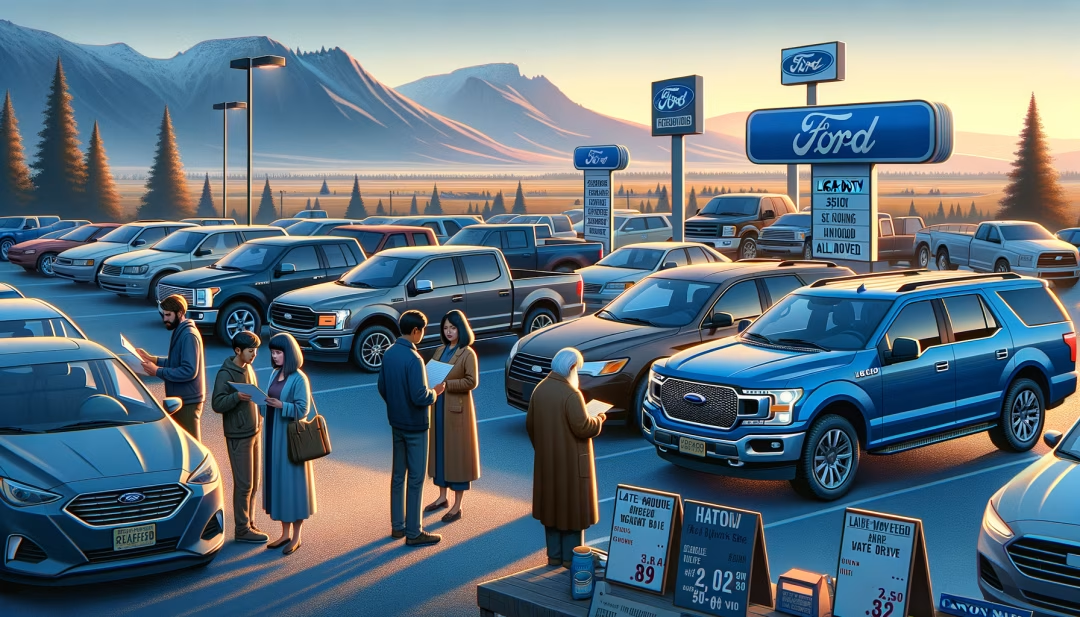
Buying a used car in Canyon County is easier with a clear plan. This guide combines local insights with proven steps to help you match a vehicle to your budget, lifestyle, and credit profile. It also links to research pages and financing tools so you can verify prices, compare trims, and understand monthly costs before you visit a lot or finalize paperwork.
Canyon County drivers in Nampa, Caldwell, Middleton, Greenleaf, Notus, Parma, Melba, and Wilder rely on versatile vehicles for commuting, family schedules, weekend trails, and winter conditions. The used market often delivers strong value with lower depreciation, more equipment for the money, and a broad choice of body styles. With a solid inspection and history review, many pre owned vehicles can serve reliably for years while keeping monthly payments in line with your budget.
Clarity on total cost keeps your search focused and stress free. Start by estimating a monthly amount that fits comfortably within your income and recurring bills. Then consider total ownership costs over the first 24 to 36 months, not just the sale price.
If you plan to finance, preview rates and terms in used-car-financing-canyon-id and compare how different down payments affect monthly cost. For shoppers rebuilding credit, second-chance-auto-financing-canyon-id outlines paths that may help you move forward.
Credit influences approval, term length, and interest rate. Reviewing your credit profile before you shop helps you set expectations and gather documents. Many Idaho shoppers see improved terms with a slightly higher down payment or a shorter term that reduces total interest cost over time.
Daily commuting on I 84, family duties around Nampa and Caldwell, or weekend trips to the Owyhee backcountry call for different features. Define what a good fit means for your routine.
Browse current choices in used-inventory and review local sale patterns with used-car-market-research-canyon-id to gauge fair pricing for trims and mileage.
A quality used car combines a clean or well explained history with strong mechanical condition. Ask for a vehicle history report to review title status, prior damage, mileage readings, and service events. Then confirm condition with an in person inspection.
Ask what reconditioning was completed. Recent tires, brakes, fluids, and filters can add meaningful value and reduce near term expenses.
A strong test drive mirrors your daily routes. Include stop and go near schools, a merge onto I 84 or Karcher Connector, and a few minutes at 45 to 55 mph to catch vibrations or alignment pull. Test parking in a tight spot to confirm visibility. Listen for wind or tire noise, check for smooth downshifts, and confirm that advanced driver features behave as expected. Bring child seats or gear you use weekly to validate fit before you decide.
Your trade value depends on condition, mileage, market demand, and wholesale trends. Gather maintenance records and note any recent tires or major services. Clean the vehicle and remove personal items so the appraiser can quickly inspect. Reviewing similar vehicles in used-inventory and sold-inventory helps you understand real pricing bands and sets realistic expectations.
Idaho requires proper title assignment, odometer disclosure, and registration within state timelines. State sales tax applies to most retail vehicle purchases. Registration fees vary with vehicle type and weight. If you are bringing a vehicle from out of state, plan for a quick VIN inspection during registration. Maintain photo ID and insurance proof to streamline the process. For privacy and user terms, see privacy-policy and visitor-agreement.
Request insurance quotes during your research phase so coverage is ready at delivery. Consider comprehensive and collision on newer or higher value vehicles. Ask about gap coverage if your down payment is small or your term is long. Some shoppers prefer a service contract for added budget predictability. Choose only what aligns with your risk tolerance and ownership plans.
Arrive with research in hand and focus on the out the door figure that captures taxes and fees. If you are financing, compare options from used-car-financing-canyon-id and your bank or credit union. Clarify any reconditioning invested in the vehicle. Be open about your budget, timeline, and must have features. A direct, data based conversation typically finds a fair middle ground faster.
Trucks and AWD SUVs often see stronger demand during fall and winter, while compact cars may offer additional value during fuel price swings. Inventory cycles also reflect trade in surges after new model releases. Use county specific pages to compare how values move across Idaho regions, which can help you time your search and shortlist with confidence.
Use these resources as you plan your next steps.