Welcome to the Used Car Market Research Valley ID guide. If you are shopping for a dependable pre owned vehicle in Valley County Idaho, understanding local pricing, availability, and seasonal demand can save time and money. This page brings together practical insights that reflect how shoppers in Cascade, McCall, and Donnelly evaluate trucks, SUVs, and commuter cars. You will learn what affects price in mountain towns, how mileage and age trade off in value, and which features deliver the best daily driving comfort in changing weather. We also explain how to read a vehicle history report, compare ownership costs, and assess condition with a checklist you can use on any test drive. When you are ready to dive deeper, explore our used inventory, recent sales, financing resources, and county by county research to see how Valley trends compare across Idaho.
Valley County drivers often prioritize all wheel drive, ground clearance, towing capability, and winter ready tires. That focus can influence pricing during cold months and around holiday travel. Use the research below to plan the right time to buy, compare similar vehicles, and build a simple budgeting model that includes insurance and maintenance for mountain driving. When you are ready, review our inventory and county specific resources.
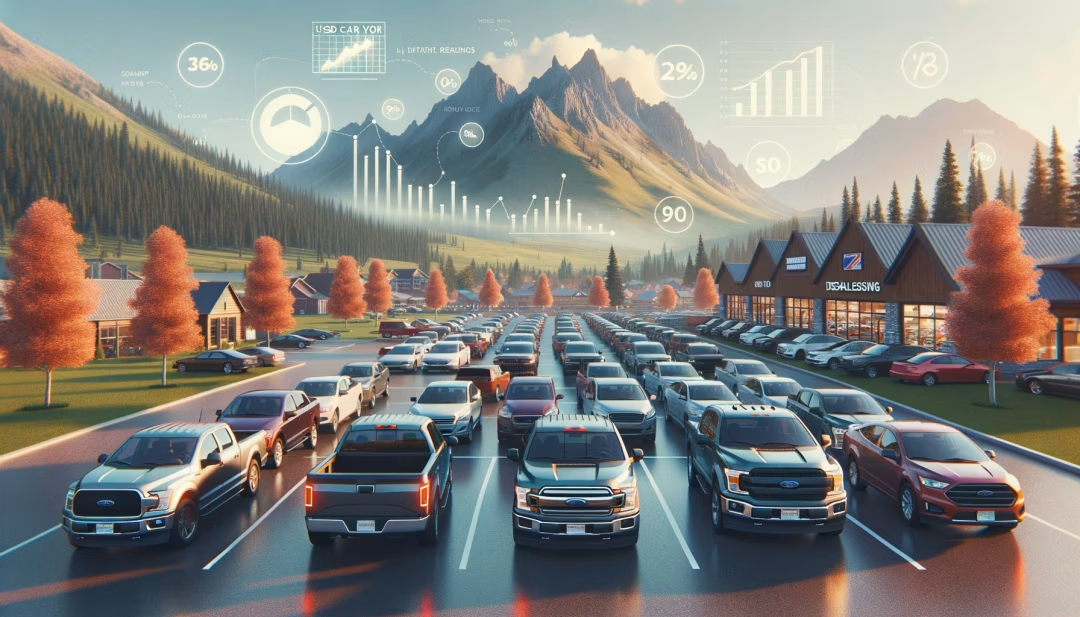
The used car market in Valley County reflects the lifestyle of mountain towns. Trucks and SUVs that handle snow, gravel roads, and weekend towing lead demand, while efficient compact SUVs and crossovers serve daily commutes. Seasonality matters. Four wheel drive and all wheel drive models often sell faster from late fall through early spring. Summer can favor vehicles with towing packages for lake trips and camping. Mileage and condition drive price more than model year alone, and vehicles with comprehensive service records maintain stronger value.
Combine local listings, recent sales, and condition data to estimate a fair value range. Start with a shortlist of comparable vehicles that match drivetrain, trim, mileage, and equipment level. Track a sample of asking prices and note which units sell quickly. Use that information to understand the spread between high mileage work trucks, well kept family SUVs, and lower mileage seasonal vehicles that see limited winter use.
Total cost of ownership depends on more than the initial purchase. Fuel economy can vary widely between compact crossovers and heavy duty trucks, and long grades can amplify the difference. Brake wear, tire replacement, and alignment needs may increase with unpaved road travel. Ask for records of transmission and coolant services on vehicles used for towing, and verify the condition of the battery and charging system for cold starts.
A well maintained higher mileage truck with consistent service can be a better bet than a low mileage unit with gaps in maintenance. Cold weather starts, towing, and altitude can influence wear. Focus on documented services such as coolant changes, transmission services, spark plugs on schedule, and differential fluid replacement. A clean undercarriage and tight suspension often indicate careful ownership and less exposure to corrosive conditions.
Bring a flashlight, code reader if available, and this quick checklist. Evaluate cold start behavior, listen for transfer case noise on AWD and 4WD, and verify that all driver aids function correctly. Look for even tire wear and match tire brands across all corners. Confirm the spare tire and jack are present. Scan the infotainment system for camera operation and verify heated features activate quickly.
A verified vehicle history helps you separate well cared for vehicles from risky purchases. Review title status, accident records, airbag deployment, and maintenance events. For vehicles used in recreation areas, pay attention to ownership regions and service locations. If the report shows frequent tire changes, inspect alignment. If the report shows towing equipment added, check transmission service intervals.
Financing shapes total cost and budget flexibility. Compare terms, consider total interest paid, and look for prequalification that does not impact credit. Buyers building credit history can review second chance options with clear conditions and payment schedules. Include insurance quotes and expected maintenance in your monthly plan.
Trade in values track local demand and reconditioning cost. Clean the vehicle, document maintenance, and provide receipts to support valuation. Trucks with snow rated tires and records of recent brake service may see stronger offers ahead of winter. Consider listing or trading slightly before peak demand for AWD and 4WD. If you own a fuel efficient commuter car, summer tourist season can lift interest from seasonal workers and visitors.
Buying from a dealer can simplify paperwork, offer more financing options, and provide reconditioning transparency. Private party purchases can offer cost savings but may require independent inspection and more time to vet history. In remote areas, factor in travel time and transport costs if you expand your search radius to adjacent counties.
Plan for title transfer steps, bill of sale, emissions or inspection requirements where applicable, and plate or registration timing. Confirm that the VIN on the title matches the vehicle and that any lien releases are available. Keep copies of all purchase documents and warranty or service contracts.
Simple tools make better decisions. Build a side by side spreadsheet for the top three vehicles on your list. Track VIN, trim, drivetrain, mileage, tire age, brake depth, fluid service evidence, and any accessories. Estimate a conservative maintenance reserve for the first year. If two similar vehicles are close in price, prioritize the one with clearer history and better tires to reduce immediate costs.
Regional comparisons can sharpen your budget. Counties with larger populations may show broader trim availability and faster inventory turnover, while mountain counties can support higher pricing on capable AWD and 4WD vehicles. Check a few neighboring research pages to gauge differences and confirm that your target price aligns with supply and demand across the state.
Use live inventory to benchmark real options and track price changes. Review recent sales to understand what sells quickly and why. Pay attention to trim level, condition notes, tire details, and any reconditioning performed before sale. These cues reveal local preferences and help you decide when to act on a strong match.
The more you know, the better your results. Our county focused buying guides and blog posts cover negotiation tips, inspection steps, and budget planning. Combine these with the research on this page to build a practical plan for your next purchase in Valley County.
Demand for AWD and 4WD rises in colder months, which can support stronger pricing and faster sales for snow capable vehicles. If you want those features at a discount, consider shopping in late spring when selection may be broader and urgency is lower.
The sweet spot often combines documented maintenance with moderate mileage. A truck with complete service history and recent tires or brakes can outperform a lower mileage unit with limited records. Verify differential and transmission services on vehicles used for towing.
AWD or 4WD, ground clearance, snow rated tires, heated features, remote start, and tow packages are commonly prioritized. Roof racks and cargo systems are useful for outdoor gear. These items can add value in resale if maintained properly.
Collect local comparables that share drivetrain, trim, and mileage. Adjust for condition items like new tires or recent brakes. Review recent sales to confirm what sells quickly. If the vehicle includes snow tires and service records, expect a reasonable premium in winter.
Shoppers can compare standard used auto loans alongside second chance programs that help rebuild credit. Prequalification and transparent terms are important. Explore resources here: used-car-financing-valley-id and second-chance-auto-financing-valley-id.
This Used Car Market Research Valley ID guide is updated periodically with practical observations from regional activity. For broader context on Idaho trends and buyer education, visit the related research and guide pages listed above.